10 Tips for CNA Clinical Skills Practice That Work

Quick Summary
To practice cna clinical skills effectively, use a structured four-week calendar with fixed sessions, rotate skills and keep a practice log, and film yourself once a week to compare against your state's checklist. Rehearse opening steps like hand hygiene and introductions first, then run full start-to-finish dress rehearsals.
Week 1 focuses on foundation skills like hand hygiene, introductions, and protecting privacy.
Pair each practice session with a log tracking skill name, date, missed steps, and awkward steps.
Film yourself weekly and compare the recording line by line to your state's skills checklist.
Practice with a partner or observer who gives feedback on hand hygiene timing and patient comfort.
Week 4 is a full dress rehearsal including cleanup, final hand hygiene, and documentation.
Table of Contents
Why Structured Practice Matters for CNA Clinical Skills
Last Updated: October 28, 2026
Passing the CNA skills test depends less on memory and more on repetition. Candidates who practice each cna clinical skills routine in the same order, with the same checks, tend to make fewer errors when an evaluator is watching.
A clinical skill has a sequence. Hand hygiene comes before patient contact. Explaining the procedure comes before touching the patient. Locking the bed or wheelchair comes before any transfer.
Structured practice also exposes weak spots early. A simple log of which skills you rehearsed, which steps you forgot, and which steps felt awkward gives you a clear study plan for the next session.
The 10 tips below are built around that idea. The first three set up your foundation, the next three turn practice into a routine, and the last four push you to rehearse under realistic conditions.
Tips 1-3: Build Your Foundation Before You Practice
Start by learning the exam format and the scoring rules for your state. Skills tests differ in how many skills are included, whether candidates draw skills at random, and how evaluators score critical steps.
Next, gather a skills checklist that lists every required step in order. Keep it in front of you during each session.
Third, practice explaining each skill out loud. Evaluators expect you to introduce yourself, explain what you are about to do, and protect the patient's privacy and dignity.
Tips 4-6: Turn Practice Into a Repeatable Routine
A repeatable routine can help organize practice. The three habits below offer one way to structure it.

Tip 4: Build a four-week practice calendar with fixed sessions.
Map the four weeks before your test date like this:
Week 1, Foundation. Two skills per session. Focus on hand hygiene, introducing yourself, explaining the procedure, confirming identity, and protecting privacy. Practice these opening steps.
Week 2, Core skills. Two or three skills per session. Rotate through the skills your state lists in its candidate handbook, such as bed bath, bedpan assistance, transfer with gait belt, range-of-motion exercises, and vital signs.
Week 3, Weak spots and timing. Pull the skills you logged as shaky in Weeks 1 and 2. If a skill runs long, find the wasted motion rather than skipping a step.
Week 4, Full dress rehearsal. Run skills start to finish, including cleanup, final hand hygiene, and documentation.
Pro Tip Put the calendar on your phone with a reminder 10 minutes before each session.
Tip 5: Rotate skills and keep a practice log.
Pick two or three skills per session and cycle through the full list over a set number of weeks. Pair each session with a simple log with four columns: skill name, date practiced, steps missed, and steps that felt awkward. Review the log before the next session and start with the skill that has the most missed steps.
Tip 6: Film yourself once a week and compare to the checklist.
A recording can be reviewed for details such as handwashing, positioning, and checking the brakes. Set your phone on a stable surface so the full body and the bed or chair are in frame. After each recording, compare it line by line to your state's skills checklist and fix one issue at a time.
The four-week calendar and log below summarise how to structure your practice sessions.
Week | Focus | Sessions |
Week 1 | Foundation: hand hygiene, introductions, explaining the procedure, privacy | Two skills per session |
Week 2 | Core skills rotated from your state's handbook list | Two or three skills per session |
Week 3 | Weak spots and timing from the log | Target skills logged as shaky |
Week 4 | Full dress rehearsal, start to finish | Full sequence including cleanup and documentation |
Tips 7-10: Rehearse Under Realistic Conditions
The last four tips add a partner, a clock, an observer, and a full start-to-finish run to your routine.
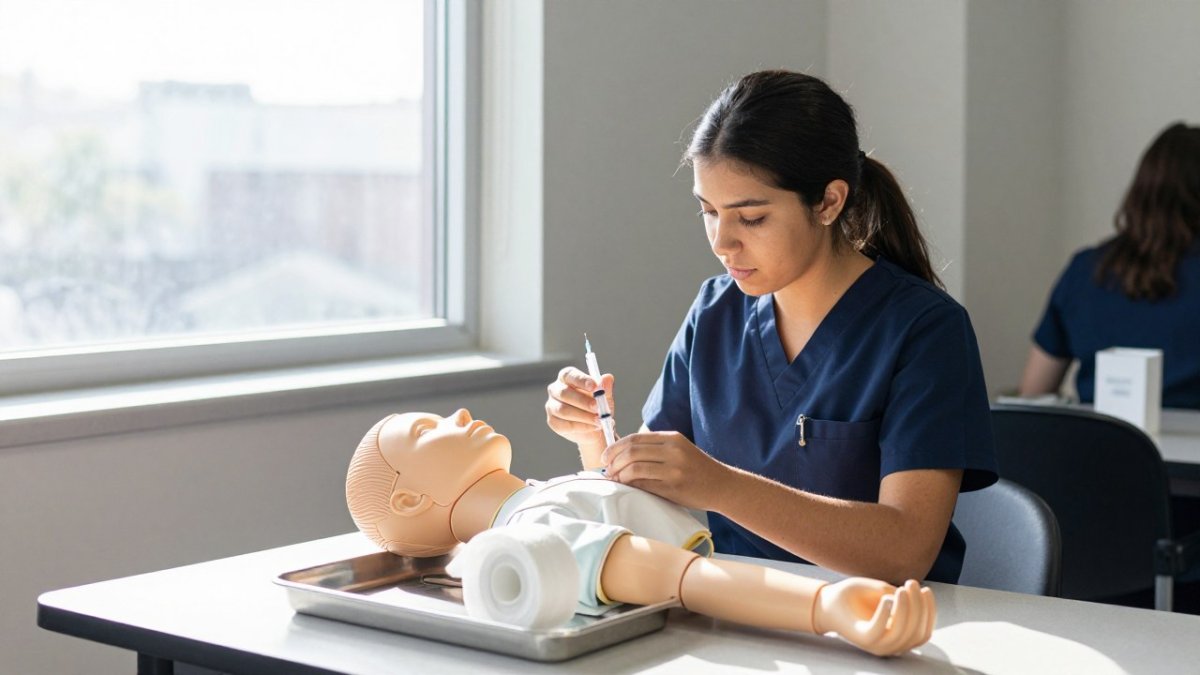
Tip 7: Practice with a partner, a mannequin, or a low-cost setup.
A partner can play the role of the patient and raise questions during practice. If you do not have a partner, you can practice on your own.
Tip 8: Time yourself against the limit, not against the clock on the wall.
Practice each skill at a measured pace, without skipping steps.
Tip 9: Practice under mild pressure with an observer.
Have someone observe you without interrupting, then give feedback afterward. Ask the observer to watch for hand hygiene timing, whether you explained the care, and whether you checked the patient's comfort at the end.
Tip 10: Run the full sequence, including the closing steps.
Practice the full sequence from start to finish: knock before entering, introduce yourself, explain the procedure, confirm identity, protect privacy, perform the skill, check comfort, clean up, perform final hand hygiene, and document.
CNA Skills Test Steps to Rehearse Until They Are Automatic
The article's practice tips include hand hygiene, introducing yourself, explaining the procedure, confirming identity, protecting privacy, using personal protective equipment, checking bed or wheelchair safety, and checking the patient's comfort.
Pay attention to safety steps, including locking bed wheels and wheelchair brakes, keeping the bed at a safe height, and keeping the call light within reach.
CNA Skills Test Mistakes That Cost Candidates Points
Verify each step against your state's current skills criteria before test day.
Book Your Hands-On Training at Life Vest Training
Life Vest Training offers a hybrid model that combines digital coursework with hands-on labs. Life Vest Training is an official CA regional testing site.
Explore our CNA program options. Visit our website for current pricing and enrollment details. Claim your seat now.
Frequently Asked Questions
How do you practice CNA clinical skills at home?
Set up a clear space, gather a bed or chair, gloves, and a timer, and rehearse one skill at a time while saying each step out loud. You can review a phone recording and work from a skills checklist. You can also practice with a partner or on your own.
What skills are tested on the CNA skills exam?
Exams vary by state and testing provider, so confirm the exact skill list with your state nursing assistant registry or testing vendor. The skills tested depend on the applicable state and testing provider. Confirm the exact list and scoring criteria with the relevant official source.
How can I prepare for the CNA skills test?
Start with the official skills list for your state. You can use a skills checklist, practice explaining each action, and rehearse under timed conditions.
What are common mistakes on the CNA skills test?
Examples of steps to review include hand hygiene, introducing yourself and explaining the procedure, checking bed or wheelchair safety, protecting patient privacy, confirming identity, and following the applicable procedure's instructions for bed rails and bed height.


Comments