Fastest Way to Get Medical Assistant Certified

Table of Contents
The Fastest Route to Medical Assistant Certification
How Long Does It Take to Become a Medical Assistant
Accelerated Programs: 4-8 Months
Standard Programs: 9-12 Months
Medical Assistant Certification Requirements
Eligibility for the Certification Exam
What the Exam Tests
CMA vs. CCMA: Which Credential Matters
Certified Medical Assistant (CMA)
Certified Clinical Medical Assistant (CCMA)
Which One Employers Prefer
Medical Assistant Certification Online: What Works
Hybrid Learning: The Fastest Realistic Option
Why Hands-On Labs Matter for Certification
Your 5-Step Action Plan to Get Certified Fast
Step 1: Choose Your Program Format
Step 2: Verify Accreditation and State Approval
Step 3: Complete Your Coursework and Externship
Step 4: Prepare for and Pass the Certification Exam
Step 5: Apply for Jobs and Maintain Your Certification
Common Mistakes That Slow Down Certification
Frequently Asked Questions
Last Updated: October 9, 2026
The Fastest Route to Medical Assistant Certification
Getting medical assistant certified doesn't have to take years. The fastest route is an accelerated program plus strategic exam prep, which can happen in four to eight months.
The timeline varies by starting point, learning style, and commitment. Some finish in under five months through intensive programs; others take nine to twelve months on a standard schedule.
The fastest legitimate route combines three elements: an accredited program, hands-on clinical training, and focused exam prep.
Pro Tip The single biggest mistake people make is confusing program completion with certification. Finishing a course doesn't make you certified, passing the exam does. This is why program selection and exam readiness matter far more than rushing through coursework.
How Long Does It Take to Become a Medical Assistant
The timeline to become a medical assistant certified depends on your program format. "Medical assistant certification" isn't a single credential, it's a category with multiple certifications, each with different eligibility paths and timelines.
Accelerated Programs: 4-8 Months
Accelerated programs compress the curriculum into intensive schedules, typically four to five days per week. A four-month program might require 15 to 20 hours weekly plus hands-on lab work.
The trade-off is intensity: you absorb clinical skills, medical terminology, patient intake, vital signs, phlebotomy basics, electrocardiogram fundamentals, and administrative tasks at once.
What makes acceleration realistic is the hybrid model: online coursework covers theory and medical terminology at your own pace, while in-person labs teach hands-on clinical skills.
Standard Programs: 9-12 Months
Standard programs typically run nine to ten months, meeting two to three days per week. This pace allows deeper learning, more practice repetitions, and time to absorb billing and coding, medical records management, and advanced clinical procedures.
Standard programs suit people balancing full-time work, caregiving, or other commitments. The slower pace builds genuine confidence in clinical skills before the certification exam, and many people retain more and perform better on the exam after a standard program.
Key Takeaway The fastest program isn't always the best program. A nine-month standard program with strong hands-on labs often produces better exam results and job readiness than a rushed four-month track.
Medical Assistant Certification Requirements
Medical assistant certification requires meeting eligibility criteria before you can sit for the exam. Many people get confused here: completing a program doesn't automatically qualify you to test.
Eligibility for the Certification Exam
To become a medical assistant certified, you must meet eligibility requirements set by the credentialing body. The two major certifications, CMA and CCMA, have different pathways.
For the CMA exam, you typically need an accredited medical assistant program (usually 12 months or longer) or one year of documented work experience in a medical office.
This is why accreditation matters for speed. An unaccredited program might cost less or take less time, but it won't qualify you to test.
What the Exam Tests
Most exams include 100-120 questions and take two to three hours. You need around 70 percent to earn your credential.
The fastest way to get medical assistant certified includes serious exam prep. Finishing your program doesn't mean you're ready to test; most credentialing bodies recommend 2-4 weeks of dedicated study after coursework.
CMA vs. CCMA: Which Credential Matters
The two main medical assistant certifications are the Certified Medical Assistant (CMA) and the Certified Clinical Medical Assistant (CCMA). They're not interchangeable, and employer preference varies by region and facility type.
Certified Medical Assistant (CMA)
The CMA credential is administered by the American Association of Medical Assistants (AAMA). It covers both administrative and clinical skills, making it the broader certification, and tests scheduling, billing, and medical records alongside clinical skills.
CMA eligibility typically requires completion of an accredited medical assistant program (usually 12 months) or one year of documented work experience. The exam is comprehensive and tests many knowledge.
Certified Clinical Medical Assistant (CCMA)
The CCMA credential is administered by the National Healthcareer Association (NHA) and focuses more heavily on clinical skills. If your program emphasizes hands-on clinical training, vital signs, patient care, and procedures, the CCMA pathway may align better.
CCMA eligibility is usually one year of clinical experience or completion of an accredited clinical medical assistant program. Some accelerated programs are designed specifically to prepare you for the CCMA exam, which is why they can be faster, they're not covering as much administrative material.
Which One Employers Prefer
Employer preference depends on location and facility type. Hospitals and clinics needing strong clinical skills often prefer CCMA; medical offices emphasizing administrative efficiency and billing might prefer CMA. In many regions, both are equally recognized.
The fastest way to get medical assistant certified sometimes means choosing the credential that aligns with your program and local job market. If CCMA is more valued locally and your program supports it, that's your path.
Watch Out Choosing a program based purely on speed without checking local employer preferences can backfire. You might finish quickly but find your credential isn't what employers in your area are hiring for. Always research what's valued in your job market before enrolling.
Medical Assistant Certification Online: What Works
Can you get medical assistant certified entirely online? Not really. You can complete most coursework online, but hands-on clinical training can't be done online.
Hybrid Learning: The Fastest Realistic Option
Hybrid programs combine online coursework with in-person labs.
This works because it separates what can be learned independently (theory, terminology, knowledge) from what requires direct instruction (clinical skills, hands-on procedures, exam prep). Lab time goes to practice, not lectures.
Life Vest Training's hybrid model works this way: digital coursework covers foundational knowledge, while in-person labs focus on the clinical and administrative skills used in hospitals and clinical environments.
Why Hands-On Labs Matter for Certification
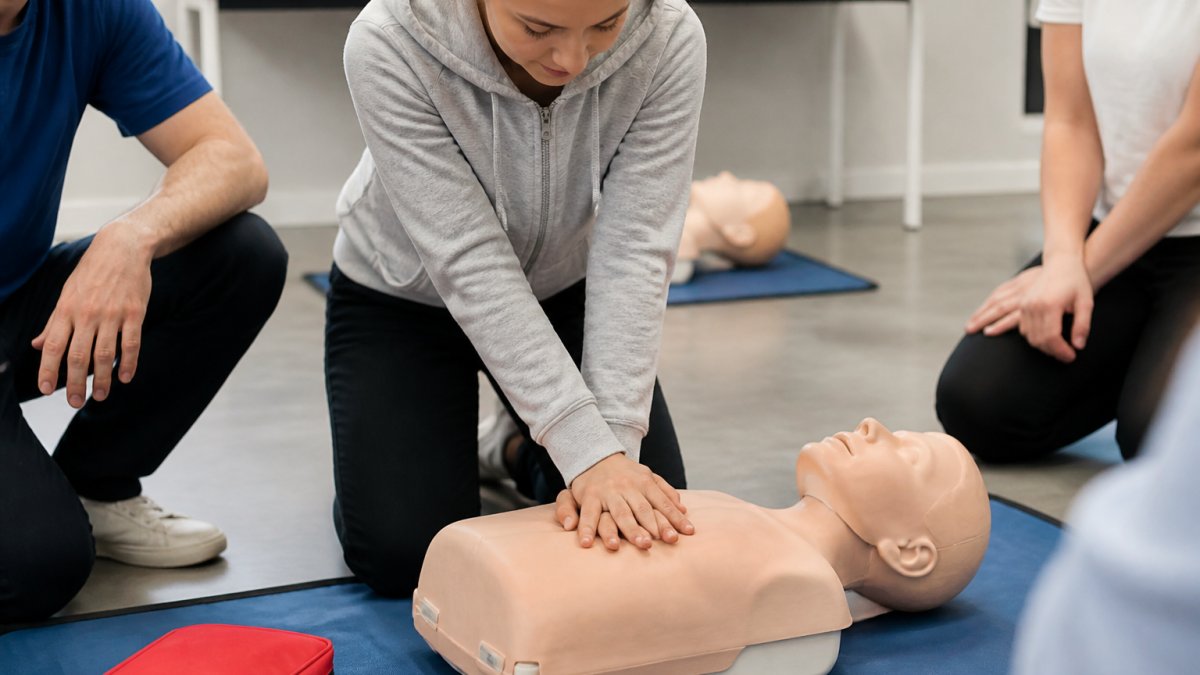
Hands-on labs aren't optional extras; they're essential for passing the certification exam and being ready for work.
Online videos can show you how to take blood pressure, but they can't correct your technique. Labs give that feedback and build muscle memory and confidence, which directly affects exam performance and job readiness.
Programs that skip or minimize hands-on labs might be faster on paper, but they produce lower exam pass rates and graduates who struggle in their first healthcare jobs.
Your 5-Step Action Plan to Get Certified Fast
Follow these steps in order to move through certification as quickly as possible without sacrificing quality.

Step 1: Choose Your Program Format
Choose accelerated (4-8 months) or standard (9-12 months) based on your work situation and learning style. If you can commit 15-20 hours weekly, accelerated works; if you need flexibility, standard is more realistic.
Choose a hybrid program if possible: faster than full-time in-person and more effective than online-only. Verify CAAHEP or ABHES accreditation, which is non-negotiable for exam eligibility.
Step 2: Verify Accreditation and State Approval
Before enrolling, confirm the program is accredited and qualifies you for the exam you want (CMA or CCMA). Ask directly: "Which certification exam does this program prepare me for?" The answer should be clear.
Also check state approval, since some states have additional requirements. Life Vest Training is an official CA regional testing site, so you can complete your training and test without coordinating with external facilities.
Step 3: Complete Your Coursework and Externship
Finish all coursework, including medical terminology, clinical skills, administrative procedures, and hands-on labs. Most programs include an externship: supervised real-world clinical experience in a hospital or medical office.
The externship confirms whether you want this career and builds the practical skills that make you employable. Don't rush it; many people find it the most valuable part of the program.
Step 4: Prepare for and Pass the Certification Exam
After coursework, spend 2-4 weeks on exam prep using practice tests, study guides, and review materials specific to your exam (CMA or CCMA). Many programs include prep, but self-study is also essential.
The exam is the actual credential. Finishing your program is just preparation. Treat exam study seriously, and you'll pass on your first attempt.
Step 5: Apply for Jobs and Maintain Your Certification
Once certified, apply for medical assistant positions in hospitals, clinics, and medical offices. Your credential is valid for a set period (usually five years), then renewed through continuing education or retesting (Recertification).
Many employers hire medical assistants before certification if you're enrolled in or have completed a program, but the certified credential opens more positions and often leads to higher pay.
Common Mistakes That Slow Down Certification
Understanding what slows people down helps you avoid it.
Choosing an unaccredited program. It might be cheaper or faster, but it won't count toward exam eligibility.
Skipping hands-on labs. Online-only programs are flexible but don't prepare you for the exam or actual work.
Underestimating exam prep. Many finish their program and assume they're ready to test, but the exam requires focused study.
Not researching local job market requirements. Choosing between CMA and CCMA without checking what local employers hire for wastes time.
At Life Vest Training, we've built our programs around this reality. Our all-inclusive tuition covers textbooks, lab supplies, and CPR certification, so there are no hidden costs slowing you down. If you're serious about launching a healthcare career quickly, verify accreditation standards with CAAHEP to understand what separates legitimate programs from shortcuts.
Frequently Asked Questions
What is the shortest time to become a medical assistant?
The fastest legitimate path is 4-8 months through an accelerated, accredited program that combines online coursework with in-person hands-on labs and a clinical externship. Completing the program is only the first step; you then must pass the certification exam. Total time from enrollment to holding a credential is typically 5-9 months, depending on exam scheduling and your study pace.
Can you become a certified medical assistant online?
Partially. You can complete classroom instruction and some clinical theory online, but certification exam eligibility and employer credibility require hands-on lab training and a supervised clinical externship. A hybrid model combining online coursework with in-person labs is the realistic fastest option. A fully online program without labs will not prepare you for certification or employment in hospitals and clinical settings.
What are the medical assistant certification requirements?
To sit for a certification exam, you must complete an accredited medical assistant training program (typically 15-20 hours per week over 4-12 months), including classroom instruction, hands-on labs covering clinical skills like vital signs and phlebotomy, and a clinical externship. You must also meet any state-specific requirements. After passing the exam, you maintain certification through continuing education and renewal fees every few years.
What is the difference between a CMA and a CCMA?
Both are entry-level certifications, but they come from different organizations. The CMA is administered by the American Association of Medical Assistants (AAMA) and covers clinical and administrative skills. The CCMA is administered by the National Healthcareer Association (NHA) and focuses more on clinical procedures. Employers in your area may prefer one over the other; check local job postings before enrolling to see which credential is most valued in your market.
How long does medical assistant training take?
Accelerated programs run 4-8 months at 15-20 hours per week; standard programs take 9-12 months. The fastest options are hybrid models combining online coursework with scheduled in-person lab days, allowing you to work part-time while studying. The total timeline from enrollment through certification exam is typically 5-9 months, assuming you pass on your first attempt.
Do I need a degree to become a medical assistant?
No. You need a certificate from an accredited medical assistant training program, not a degree. A certificate program typically takes 4-12 months and covers clinical skills, medical terminology, patient care, and administrative tasks. Some medical assistants later pursue an associate degree for advancement, but certification and employment do not require one.
Will a hybrid program let me keep working full-time while training?
Hybrid programs are designed for working adults, combining flexible online coursework with scheduled in-person lab sessions. Most require 15-20 hours per week total, split between digital lessons and hands-on labs. Many students work part-time during training, but full-time employment alongside an intensive program is challenging. Discuss your schedule with the program before enrolling to confirm it fits your situation.
Claim Your Seat Now


Comments