How to Become a Medical Assistant in California

Updated: 1 day ago
Last Updated: November 17, 2026
Quick Summary
Medical assisting is a healthcare career in which trained staff handle both clinical tasks, such as taking vital signs and assisting with procedures, and administrative work, such as scheduling and insurance claims. In California, the path involves choosing an accredited program, completing hands-on clinical practice, earning CPR certification, and sitting for a nationally recognized credential exam.
Medical assistants split their time between exam-room clinical duties and front-desk administrative work.
Life Vest Training's Medical Assisting program in Petaluma runs 7 weeks in a hybrid format with hands-on labs.
Most clinical employers expect current CPR certification, which Life Vest tuition includes.
Choose between CMA, RMA, or CCMA credentials by checking which ones employers list in job postings.
Sit the certification exam within a few weeks of finishing training for an easier experience.
Ready to start a medical assisting career?
Life Vest Training in Petaluma offers a 7-week hybrid Medical Assisting program with hands-on labs and all-inclusive tuition.
Table of Contents
What Medical Assisting Is and What the Job Involves
Medical assisting is one of the fastest ways to step into a healthcare career in the United States, and it is the foundation many people build on. Medical assistants support physicians and clinics by handling both patient-facing clinical work and behind-the-scenes administrative tasks. At Life Vest Training, our medical assisting program in Petaluma is built around exactly those two sides of the job, so graduates arrive ready for either.
Medical assistants work in physician offices, outpatient clinics, and many hospital outpatient departments. The role is broad, and no two days look identical.
Clinical duties on the patient floor
On the clinical side, medical assistants take vital signs, prepare patients for examination, assist the provider during procedures, and in many settings collect specimens and perform basic lab tasks. Skills such as phlebotomy and EKG monitoring are commonly part of the work.
Accurate readings and careful patient communication are what providers rely on.
Administrative duties at the front desk
Administrative work covers patient scheduling, electronic health records, insurance claims, billing and coding support, and keeping records compliant with HIPAA. Many clinics rely on a medical assistant who can move fluidly between the exam room and the front desk, and that dual competence is what makes candidates stand out.
How Long Does It Take to Become a Medical Assistant?
Most medical assisting training programs take months rather than years. Our Medical Assisting track at Life Vest Training runs 7 weeks in a hybrid format that combines digital coursework with hands-on labs. That schedule suits students who are working, switching careers, or moving quickly toward a nursing school application.
Program length is only part of the picture. Certification steps, exam scheduling, and job search time all add to the timeline, so plan for the full path rather than the classroom hours alone. You can see how each certification step is itemized in our medical assistant certification cost breakdown.
Medical Assisting Program Options at Life Vest Training
Life Vest Training offers a 7-week Medical Assisting program and a 5-week CNA track, both in Petaluma. The Medical Assisting program combines a hybrid learning model, where digital coursework fits around your schedule and hands-on labs build real clinical skill. Tuition is all-inclusive, covering textbooks, lab supplies, and CPR certification.

Review our medical assistant class schedule to find a start date that works for you and reserve your seat. You can also review the full Medical Assistant program details, including what each week covers.

Life Vest Training is an official CA regional testing site. If you are coming from Marin, Santa Rosa, or elsewhere in the North Bay, contact our team to ask how the hybrid format fits your schedule.
Step-by-Step Path to Medical Assistant Certification in California
Becoming a medical assistant in California follows a clearer sequence than most people expect, but each step has details that trip up first-time students. Here is the full path, with the specifics that matter in the North Bay market.
Confirm the program is accredited and career-focused. Before you enroll anywhere, ask whether the program includes both clinical and administrative training and whether it prepares you for a nationally recognized credential. Accreditation matters because many employers and certifying bodies screen on it. At Life Vest Training, our Petaluma Medical Assisting program covers both clinical and front-office skills, so you know what to study.
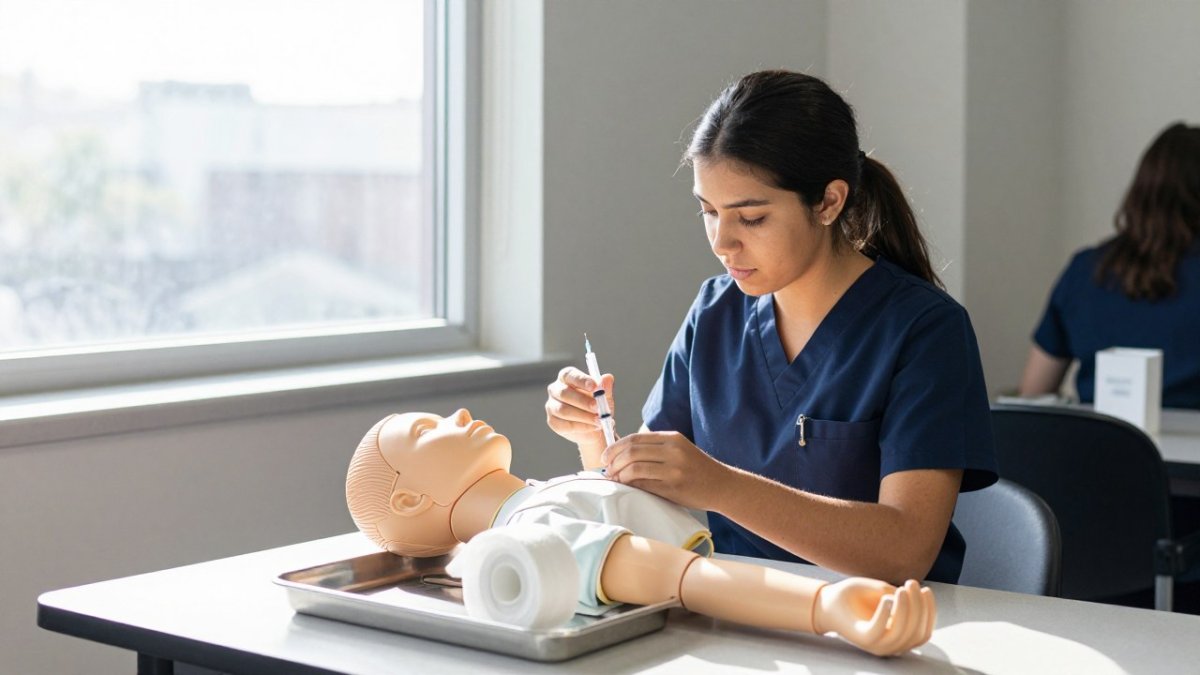
Complete hands-on clinical practice. Vital signs, patient preparation, procedure support, phlebotomy, and EKG monitoring are learned by doing, not by watching videos. Our hybrid format pairs digital coursework with in-person labs.
Earn CPR certification. Most clinical employers expect current CPR certification, and it is commonly a prerequisite for sitting a medical assisting exam. Our tuition includes CPR certification, so you leave with that requirement already checked off instead of hunting for a weekend class.
Choose your certifying credential and prepare for the exam. Medical assistants in the U.S. typically pursue one of several nationally recognized credentials, the Certified Medical Assistant (CMA) through the American Association of Medical Assistants, the Registered Medical Assistant (RMA) through American Medical Technologists, or the Certified Clinical Medical Assistant (CCMA) through the National Healthcareer Association. Each has its own eligibility rules, exam format, and renewal cycle. Confirm which credential your target employers list in job postings before you pay for an exam. Prepare while your lab skills are fresh, students who sit the exam within a few weeks of finishing training report an easier time than those who wait months.
Build a resume that shows both sides of the role. Hiring managers want to see clinical competence and front-desk fluency on the same page. List your lab hours, the procedures you performed, the EHR systems you touched, and any scheduling or insurance-claim exposure. Graduates who can speak to both exam-room and front-desk work stand out in a crowded applicant pool.
Apply locally and network in person. Life Vest Training is an official CA regional testing site, which means you train and test in the same region where you will look for work, a practical advantage when employers recognize the program and the testing location. Ask our team about local employer connections and start dates so you can time graduation to hiring cycles.
For a deeper explanation of what medical assistants can legally do in California, see our overview of medical assistant scope. Requirements can change, so confirm current rules with the relevant state authorities before you make decisions, but do not let that caution slow you down. The fastest path is to pick a start date, complete your labs, and schedule your exam while your skills are sharp. Contact Life Vest Training to reserve your seat and get your questions answered before the next cohort fills.
The table below summarises the six steps to becoming a medical assistant in California, with the timing or detail the article gives for each.
Step | What to do | Key detail |
1. Confirm the program | Check accreditation and that it covers clinical and administrative skills | Prepares you for a nationally recognized credential |
2. Complete clinical practice | Learn vital signs, procedures, phlebotomy and EKG by doing | Hybrid format with in-person labs |
3. Earn CPR certification | Obtain current CPR certification | Often required to sit a medical assisting exam |
4. Choose credential and prepare | Pick CMA, RMA or CCMA and confirm employer preferences | Sit the exam within weeks of finishing training |
5. Build your resume | List lab hours, procedures, EHR systems and scheduling exposure | Show both clinical and front-desk skills |
6. Apply locally | Train and test in the same region where you will work | Life Vest Training is an official CA regional testing site |
Medical Assistant vs. CNA: Pay, Duties and Which Fits You
Medical assistants and certified nursing assistants both work close to patients, but the day-to-day reality, the work settings, and the career ceiling differ enough that choosing the wrong track can cost you a year. Here is the honest comparison, framed for the North Bay job market.
What each role actually does all day
A medical assistant splits time between the exam room and the front desk. Clinical duties include taking vital signs, preparing patients for exams, assisting during procedures, performing phlebotomy and EKG monitoring, and handling basic lab tasks. Administrative duties include scheduling, electronic health records, insurance claims, billing and coding support, and HIPAA-compliant recordkeeping. The role is built for people who want variety and who like both patient contact and organizational work.
A CNA focuses almost entirely on direct bedside care: bathing, feeding, mobility support, repositioning, and monitoring patients in hospitals, skilled nursing facilities, and long-term care settings. The work is physically demanding and deeply patient-centered, and it is often the entry point people use on the way to nursing school.
Work settings and schedules
Medical assistants most often work in physician offices, outpatient clinics, and hospital outpatient departments. CNAs are concentrated in hospitals, nursing homes, assisted living, and rehabilitation facilities, where shifts commonly include nights, weekends, and holidays. If predictable daytime hours matter to you, medical assisting usually wins. If you want hospital exposure and are comfortable with shift work, CNA experience gets you inside the building faster.
Pay expectations
Pay for both roles varies by employer, region, and experience, so check current figures rather than relying on secondhand numbers. The U.S. Bureau of Labor Statistics publishes median pay and job-outlook data for both occupations, and the Bureau of Labor Statistics occupational outlook for medical assistants is the standard national reference.
Career path and advancement
Medical assisting offers several advancement routes: lead medical assistant, clinical coordinator, office manager, billing and coding specialist, or a bridge into nursing or allied health programs. CNA work is often a stepping stone toward RN or LPN programs, and some hospitals offer tuition assistance for CNAs who pursue nursing. Neither path is better in the abstract, the right choice depends on whether you want clinic variety or bedside intensity, and whether your next step is management or nursing school.
Which fits you
Choose medical assisting if you want a mix of patient contact and scheduling, weekday hours, and a role that lets you move between the exam room and the front desk. Choose CNA training if you want intensive bedside care, hospital exposure, and a clear route toward nursing school. At Life Vest Training, our 5-week Prenursing CNA program for students 16 and older in Petaluma and Marin is designed for exactly that nursing-school bridge, while our 7-week Medical Assisting program is built for people who want to start working in a clinic quickly. Both are taught with hands-on labs and all-inclusive tuition, so you can compare them on equal footing. Contact our team to talk through which track matches your goals, and if you are leaning toward medical assisting, reserve your seat in the next cohort before it fills.
Why Start Your Medical Assisting Career with Life Vest Training in Petaluma
Life Vest Training combines hybrid flexibility, hands-on lab practice, and all-inclusive tuition. Our Petaluma location gives you a training environment with practical tools for the workplace.
If you are ready to take the next step, reserve your seat today and start building the skills that clinics in California are looking for. Contact our team to ask about the next start date and to talk through whether medical assisting or the CNA track is the right fit for your goals.
Frequently Asked Questions
What exactly does a medical assistant do?
A medical assistant supports physicians and nurses in outpatient clinics and medical offices. Clinical duties include taking vital signs, preparing patients for exams, collecting specimens, and assisting with basic procedures. Administrative duties include scheduling appointments, handling health records, verifying insurance, and coding and billing for visits. Training at Life Vest Training covers both sides of the role so graduates can step into either setting with confidence.
Is a medical assistant the same as a CNA?
No. A certified nursing assistant usually works in hospitals, long-term care, and rehabilitation facilities, providing hands-on personal care such as bathing, feeding, and mobility support. A medical assistant typically works in clinics and medical offices and combines clinical tasks with front-office responsibilities. Both roles are common entry points into healthcare, and Life Vest Training offers both a 7-week Medical Assisting program and a 5-week CNA track.
How long does it take to become a medical assistant?
Life Vest Training's Medical Assisting program runs 7 weeks in a hybrid format that combines digital coursework with in-person hands-on labs. You should confirm current schedules and start dates directly with Life Vest Training.
What training or certification do medical assistants need in California?
California does not require a state license for medical assistants, but most employers prefer or require formal training and a nationally recognized credential. Completing an accredited medical assisting program and passing a certification exam helps demonstrate job readiness. Life Vest Training offers CPR certification as part of tuition.
Questions? Talk to Life Vest Training


Comments