How to Work as a Phlebotomist Without a Degree

Last Updated: November 14, 2026
Quick Summary
You can work as a phlebotomist without a degree because the role requires a high school diploma or GED plus a training program, not a college credential. Becoming a phlebotomist without a degree takes three steps: finish high school, complete a phlebotomy training program, then pass a certification exam and confirm your state's rules.
A high school diploma or GED is a common education requirement for entry-level phlebotomy roles.
Phlebotomy training covers venipuncture, capillary puncture, specimen handling, patient identification, and infection control.
Certification is a credential earned by passing an exam; licensure is a legal permission issued by a state.
Blood donation centers and independent laboratories are often the most willing to train new phlebotomists.
Check your state health department's rules before you enroll so your program meets state requirements.
Ready to start your phlebotomy career?
Hands-on labs, exam access, and all-inclusive tuition at Life Vest Training.
Table of Contents
Is Phlebotomy a Degree or Certificate?
Phlebotomy is a certificate-level role, not a degree profession.
That answers the real question: can you work as a phlebotomist without a degree? Yes. The path is built for people who need to start earning relatively quickly.
Most guides describe phlebotomy as a stepping stone and skip what actually decides whether you get hired: how your state regulates the role and what individual employers require.
At Life Vest Training, we train people for entry-level healthcare roles, and we encourage you to reach out to learn how our programs can prepare you for this career path.
How to Become a Phlebotomist Without a Degree: Step by Step
The fastest path takes three steps: finish high school, complete a phlebotomy training program, then pass a certification exam and confirm your state's rules.

Step 1: Earn Your High School Diploma or GED
A high school diploma or GED is a common education requirement for entry-level phlebotomy roles.
If you left school early, the GED is a real route in.
Step 2: Complete a Phlebotomy Training Program
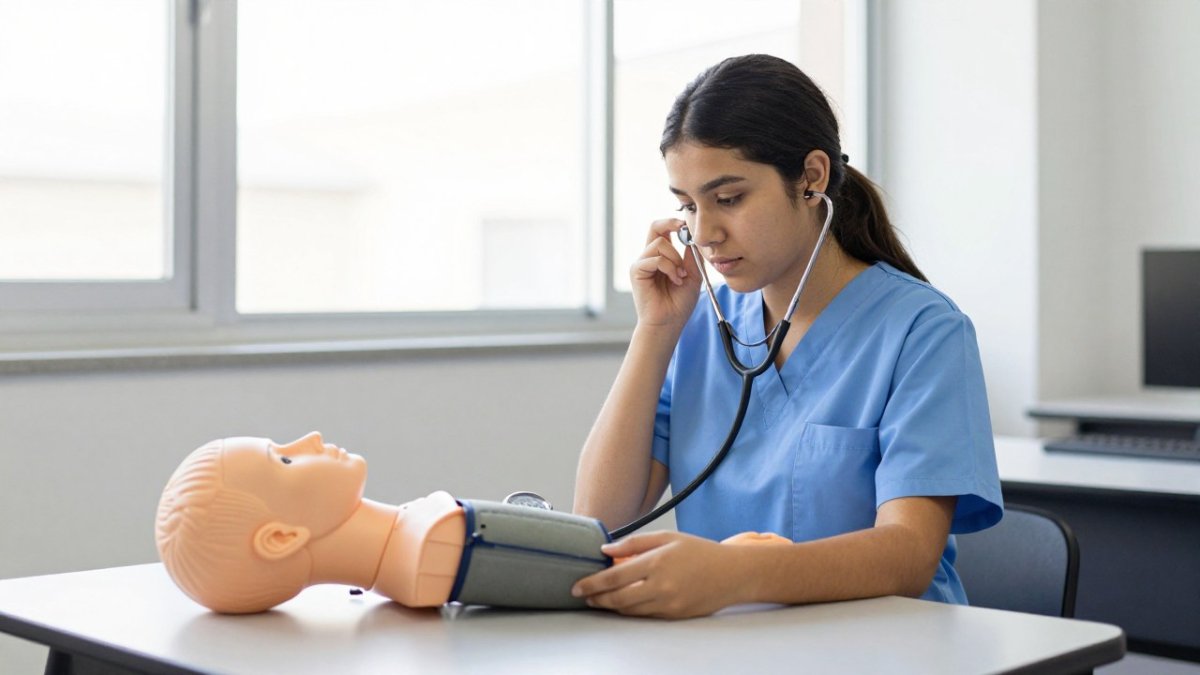
A phlebotomy training program teaches the skills you will use on the job: venipuncture, capillary puncture, specimen handling, patient identification, infection control, and medical terminology.
This is where a flexible format matters. You can explore the Medical Assistant with Phlebotomy day session we offer, and working adults can compare the evening phlebotomy session option to see which fits their schedule.
Worried about paying for it? Our guide to ways to pay for phlebotomy training covers the practical options. If you are balancing a job already, here is how to find phlebotomy classes for working adults.
Step 3: Pass a Certification Exam and Check State Rules
Certification is not the same as licensure. A certification is a credential you earn by passing an exam from a professional body. A license is a legal permission to work, issued by a state.
State requirements for phlebotomists vary. Check your state health department's rules before you enroll so the program you choose meets your state's requirements.
Phlebotomy Training Program Length and What to Expect
Phlebotomy training program length varies by program and by whether you attend full-time or part-time.
Expect a mix of three things:
Classroom instruction in anatomy, medical terminology, and safety procedures
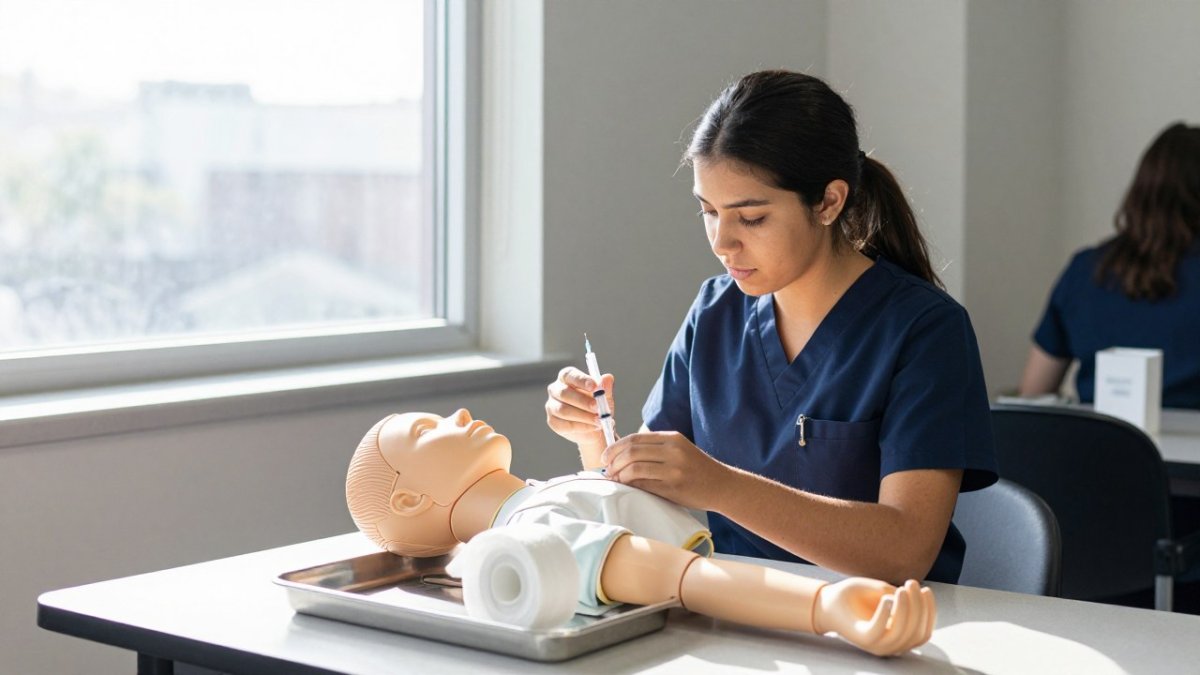
Hands-on lab practice with venipuncture and capillary puncture techniques
A clinical or externship component with supervised blood draws on real patients
Supervised draws are an important part of preparing for the role.
At Life Vest Training, our hybrid model combines digital coursework with in-person lab days for hands-on work, and we are an official CA regional testing site.
Can You Get a Phlebotomy Job Without Certification?
Whether you can get a phlebotomy job without certification depends on the employer and on local requirements. Some employers train on the job; others require a credential. Check the postings in your area before you decide.
Where non-certified hiring actually happens
Blood donation centers often run their own training programs and may sponsor your certification after you are hired.
Independent and reference laboratories frequently train new phlebotomists on their own collection protocols.
Outpatient clinics and physician offices vary widely; smaller practices sometimes train on the job.
Mobile collection and home-draw services usually want certification and some experience, so they are a later step, not a first one.
What on-the-job training actually looks like
On-the-job training is real training, not shadowing. A typical employer-led program covers patient identification, order of draw, venipuncture and capillary technique, specimen labeling and handling, infection control, and sharps safety, followed by supervised draws until you are signed off to draw independently. The trade-off: you learn one employer's protocols, not a standardized curriculum, and your sign-off may not travel if you change jobs.
How to qualify for a non-certified position
Lead with your high school diploma or GED. It is the one requirement nearly every employer shares.
Show patient-facing experience. Customer service, caregiving, retail, food service, and front-desk work all demonstrate the calm, clear communication phlebotomy requires.
Name the skills you can prove. Specimen handling, infection control, and medical terminology from any prior healthcare coursework belong on your resume.
Target the right employers first. Apply to labs and blood centers where training is built into the role, then move to hospitals once you have documented draws.
Ask about certification sponsorship. Some employers pay for your exam after a probation period; ask in the interview, not after you are hired.
The trade-off, stated plainly
On-the-job training gets you earning sooner, but you may hit a ceiling when you apply for hospital roles or try to move up.
Our view: if you can complete a certificate program, it is worth considering. At Life Vest Training, our hybrid model pairs digital coursework with in-person lab days, our all-inclusive tuition covers textbooks, lab supplies, and CPR certification, and as an official CA regional testing site we host your exam.
How to Get a Job as a Phlebotomist With No Experience
Getting hired with no experience comes down to making your training count as experience. Employers know new phlebotomists are new. What they screen for is evidence that you have done supervised draws and can handle patients calmly.
Finish your clinical hours first. Do not apply until your supervised draws are documented.
List your training like a job. Put your clinical hours, the number of draws you completed, and your certification on your resume.
Target the right employers. Labs, blood banks, clinics, and hospitals hire entry-level phlebotomists; start where the volume of draws is high.
Apply to several settings at once. A clinic that draws a few patients a day hires differently than a busy lab.
Prepare for the patient-care questions. Interviewers ask how you handle a nervous patient or a difficult draw. Have real answers ready.
A common mistake is applying only to hospitals. Clinics and independent labs are often more willing to hire a new phlebotomist and give you the volume you need to get good.
State Rules vs. Employer Requirements: What Actually Decides
Two different sets of rules decide whether you can work: your state's rules and each employer's hiring requirements. When they conflict, the stricter one wins. Treating them as the same thing is how people waste money on the wrong program.
The legal floor: state rules
State rules set the minimum. Some states require phlebotomists to hold a license or a specific certification before they can draw blood, and others do not. The rules typically live with the state health department or a state clinical laboratory board, and they can change. A program that is fine in one state may not satisfy another's requirements, which is why you check before you enroll, not after.
What to look for on your state health department's site:
Whether phlebotomy is a licensed role, a certified role, or an unregulated role
Which credentialing bodies the state recognizes if a credential is required
Any minimum training hours or clinical draw counts the state mandates
Whether the state requires a background check or a specific exam
If your state does not regulate phlebotomy, that does not mean no rules apply. It means the employer decides, and employers are stricter than most people expect.
The hiring floor: employer requirements
Employer requirements sit on top of the state floor. A hospital may require certification even where the state does not. A blood donation center may hire you with on-the-job training and no credential at all. The same resume can be competitive at one employer and screened out at another.
Here is how the major employer types typically differ:
Employer type | Typical credential expectation | Typical experience expectation |
Hospitals and health systems | Certification commonly required or strongly preferred | Some supervised draw experience expected |
Independent and reference laboratories | Certification preferred; high-volume training often provided | Willing to train new phlebotomists |
Outpatient clinics and physician offices | Varies widely; often on-the-job training | Entry-level friendly |
Blood donation centers | Often train on the job; certification may be sponsored | Entry-level friendly |
Mobile collection and home-draw services | Certification usually required | Some experience and reliable transportation expected |
A common pattern: the employers with the highest draw volume, labs and blood centers, are the most willing to train, while the employers with the steadiest schedules, hospitals and clinics, are the most likely to screen on certification. That is the trade-off to plan around.
How to check both before you spend money
Search your state health department site for phlebotomy licensing or certification requirements.
Pull five to ten job postings in your area for the settings you actually want.
Note which credential each posting names and whether it says "required" or "preferred."
Confirm your training program's exam is accepted by those employers and, if your state regulates the role, by the state.
A certification that is optional in one state can still be expected by the employers you want to work for. Check both before you spend money on training. At Life Vest Training, we are an official CA regional testing site, so you take your exam where you trained, and we encourage you to contact our team to discuss your options before you commit to a session.
Claim Your Seat in a Phlebotomy Training Program
The path to a phlebotomy career is short, but it is not automatic.
At Life Vest Training, we built our programs for people who need to start earning without putting their life on hold.
If you are ready to stop researching and start training, we would be glad to help you find the right session.
The shortage of trained clinical staff is not letting up, and phlebotomy remains one of the fastest ways into a healthcare setting without a degree.
Frequently Asked Questions
Can you be a phlebotomist with no degree?
Yes. Phlebotomy is a certificate-level role, not a degree profession. Employers typically ask for a high school diploma or GED, completion of a phlebotomy training program, and often a certification such as those offered through national credentialing bodies. No associate or bachelor's degree is required to start. What matters most is documented hands-on training in venipuncture and capillary puncture, plus the patient care and infection control habits you build in a clinical lab setting.
Can you get a phlebotomy job without certification?
Sometimes, but it depends on your state and the employer. Some states have licensure or certification requirements, while others leave it to the hiring organization. Hospitals and large labs usually prefer or require a recognized credential because it signals verified training. If you want the widest set of options, plan to complete a training program and sit for a certification exam. That combination also makes it easier to move between employers later.
How long does a phlebotomy training program take?
Program length varies by school and format. Some certificate programs run a few weeks of focused classroom and lab work, while others stretch over a semester with an externship. What matters is that the program includes supervised hands-on practice in venipuncture, capillary puncture, specimen handling, and patient identification. Ask how much of the schedule is live lab time versus online coursework, especially if you are working while you train.
How do you get a phlebotomy job with no experience?
Start by finishing a training program that includes clinical practice, then apply to entry-level positions at hospitals, diagnostic labs, blood centers, and clinics. Highlight transferable skills like customer service, attention to detail, and comfort working with people. Ask your program about job placement help and whether you can speak with recent graduates. A short, focused training track with real lab hours gives you something concrete to discuss in interviews.

Comments