Is Phlebotomy Training Worth It for Nursing Students?

Last Updated: November 2, 2026
Quick Summary
Yes, phlebotomy training is worth it for most nursing students because it delivers hands-on needle skill, real patient contact, and a certification that strengthens applications. The program is short, and the credential can become a paid patient-facing job you hold while finishing prerequisites.
Compare programs on total cost to complete, not tuition alone.
Phlebotomy training is short, measured in weeks rather than semesters.
A phlebotomy certificate does not replace prerequisite coursework or entrance exams.
Hiring managers value phlebotomy experience because it proves patient work and safety protocol.
Life Vest Training's all-inclusive tuition covers textbooks, lab supplies, and CPR certification.
Table of Contents
Phlebotomy Certification Cost: What Nursing Students Actually Pay
Phlebotomy Training Duration: Fitting It Around Nursing Prerequisites
Benefits of Phlebotomy for Nurses: Clinical Skills That Transfer
How Phlebotomy Certification Affects Nursing School Admissions
The Employer Perspective: Why Hiring Managers Value Phlebotomy Experience
The Real ROI of Phlebotomy Training for Nursing Students
Is phlebotomy training worth it for nursing students? Yes, for most students headed into clinical programs. The payoff is hands-on needle skill, real patient contact, and a certification that strengthens applications. The math usually favors training.
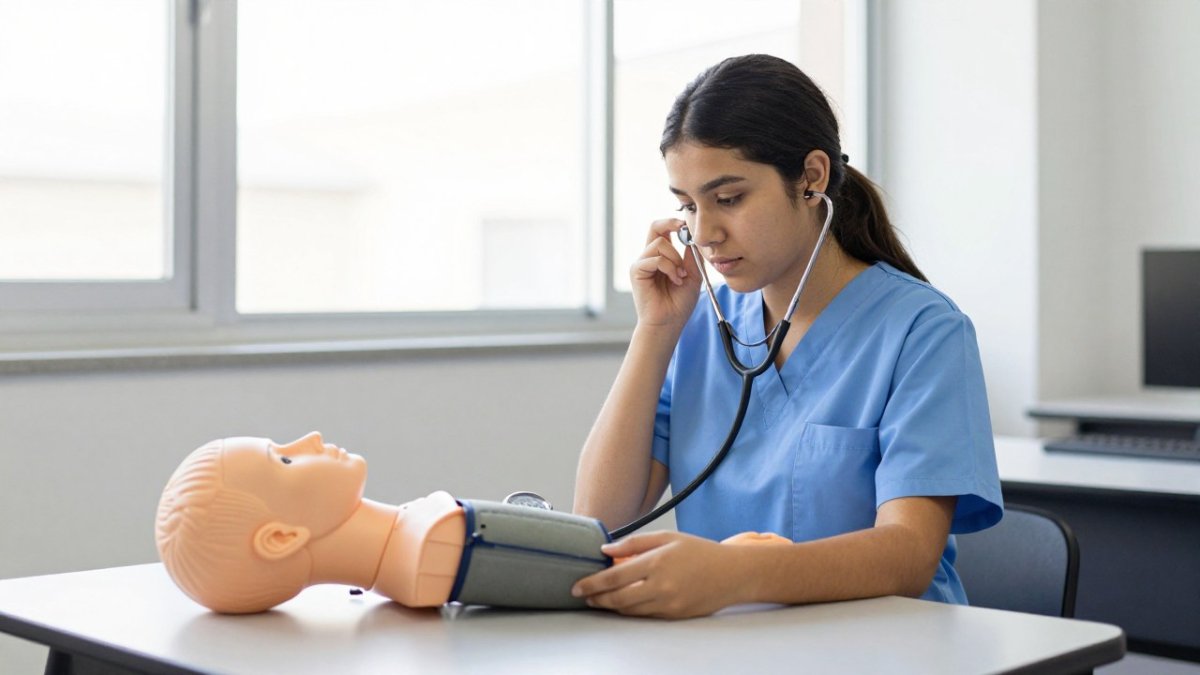
Phlebotomy training is a short, skills-focused program that teaches blood draws, specimen handling, and patient interaction. Medical Assistant with Phlebotomy - Day Sessions lets you participate in our in-person Phlebotomy Lab to gain hands-on experience with blood drawing techniques and patient interaction. That short runway is the point: you gain a clinical skill before nursing school even starts.
Here is the trade. You spend a modest amount of time and money up front. In return, you walk into nursing school with venipuncture experience most classmates do not have.
What You Gain vs. What You Spend
The gains are practical and immediate:
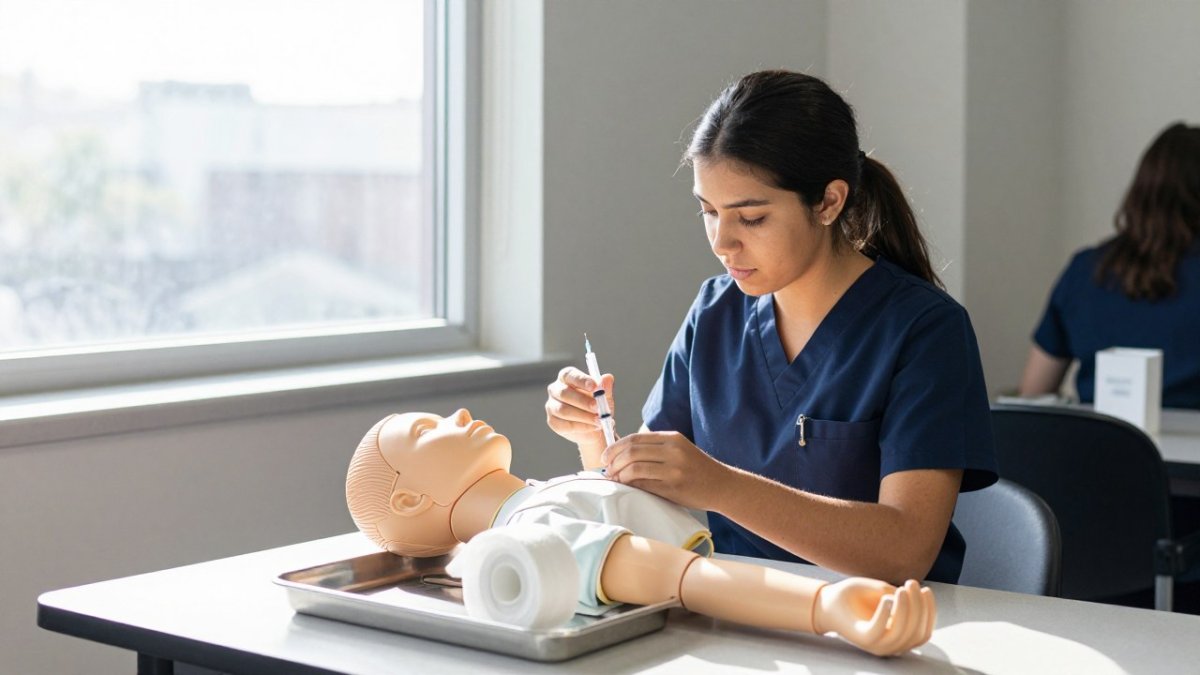
Real needle time. You practice on training arms and live draws under supervision.
Patient rapport. You learn to calm nervous patients before a stick.
Resume signal. Certification shows initiative to admissions committees.
A paid entry point. Many students work as phlebotomy technicians while studying.
The costs are time, tuition, and effort. There are no shortcuts around supervised practice.
Phlebotomy Certification Cost: What Nursing Students Actually Pay
Phlebotomy certification cost is the line item nursing students ask about first, and the honest answer is that total cost depends on four components: tuition, textbooks and lab supplies, a background check and health clearance (titers, TB test, flu shot), and the certification exam fee. Most students pay for all four, but programs bundle them differently, so the sticker price alone tells you very little.
Here is how the costs typically break down in the United States:
Tuition. Pricing varies by program and depends on what is included. Compare each program's written breakdown.
Books and lab supplies. Ask whether the tuition includes the training arm supplies, evacuated tubes, butterflies, and gloves you will use in lab.
Background check and health clearance. Most clinical sites require these before you work with a live patient.
Certification exam fee. Confirm which certifying body your program prepares you for and whether the exam fee is included.
A common mistake is comparing sticker price alone. Ask what the tuition includes. Some programs bundle books and supplies. Others charge extra for each. Add every line before you compare programs.
Watch Out A low headline price can hide lab fees, exam costs, or a required externship fee. Request the full cost sheet in writing before you enroll.
The ROI Math Nursing Students Should Actually Run
Most articles on this topic are anecdotal. The useful frame is time-to-earn versus cost-to-complete. Phlebotomy training is short, weeks, not semesters, so the real question is how quickly the credential lets you earn while you finish nursing prerequisites.
Run three numbers before you commit:
Total program cost (tuition + books + clearance + exam).
Weeks until you can work as a phlebotomy technician, including any externship requirement.
Local entry-level phlebotomy technician pay. Check the Bureau of Labor Statistics Occupational Employment and Wage Statistics for your state, and cross-check local job postings, because pay varies significantly by region and setting (hospital, outpatient lab, blood bank, mobile collection).
If the credential lets you work part-time in a patient-facing role while you complete prerequisites, the effective cost of training drops every pay period. That is the mechanism most students miss: phlebotomy is not just a resume line, it is a paid clinical job you can hold during school.
At Life Vest Training, all-inclusive tuition covers textbooks, lab supplies, and CPR certification. Plans & Pricing lets you compare the cost of phlebotomy training against the return. For current prices, visit our website or request a quote before you commit.
Key Takeaway Compare programs on total cost to complete, not tuition alone, and weigh that total against the weeks until you can start earning as a phlebotomy technician in your area.
Most students pay for four cost components, though programs bundle them differently.
Cost component | What to check |
Tuition | Compare each program's written breakdown |
Books and lab supplies | Ask whether training arm supplies, tubes, butterflies, gloves are included |
Background check and health clearance | Titers, TB test, flu shot; most clinical sites require these |
Certification exam fee | Confirm certifying body and whether exam fee is included |
Phlebotomy Training Duration: Fitting It Around Nursing Prerequisites
Phlebotomy training duration is short by design. That makes it easier to slot in alongside nursing school prerequisites like anatomy and microbiology.
The bigger question is scheduling. Many students work while completing prerequisites. A hybrid format helps here: digital coursework you finish on your own time, plus in-person labs for the hands-on parts. Medical Assistant with Phlebotomy - Evening Sessions lets you participate in our in-person Phlebotomy Lab to gain hands-on experience with blood drawing techniques and patient interaction.
Benefits of Phlebotomy for Nurses: Clinical Skills That Transfer
The benefits of phlebotomy for nurses go well beyond drawing blood. The core skill, venipuncture, is the same foundation behind IV insertion and vascular access.

You also build bedside manner under real pressure. A nervous patient is a nervous patient, whether you are a phlebotomy technician or a nursing student.
Vascular Access and Patient Rapport
Vascular access is a daily nursing task. Practicing it early builds confidence and patient safety habits. You learn to check site selection, confirm identity, and handle a missed stick calmly.
Patient rapport grows with repetition. The more draws you do, the better you read a patient's nerves and adjust.
How Phlebotomy Certification Affects Nursing School Admissions
Does phlebotomy certification help in nursing school admissions? It can add to an application, but it rarely decides one on its own.
Nursing admissions committees weigh a fairly consistent set of factors: prerequisite GPA (especially anatomy and physiology, microbiology, and chemistry), standardized entrance exam scores (TEAS or HESI A2, depending on the program), overall GPA, healthcare experience, essays, and interviews. A phlebotomy credential does not move your science GPA. What it does is strengthen the healthcare-experience and essay/interview dimensions at the same time.
A phlebotomy credential can signal to an admissions committee that you have worked with patients and understand clinical settings, and it can support a coherent career narrative for career changers.
What It Does Not Do
Be realistic about the limits. A phlebotomy certificate does not replace prerequisite coursework or entrance exams. Admissions committees are looking for evidence you understand patient care and can handle clinical rigor. Phlebotomy is one credible way to show that; CNA experience, medical assistant work, or EMT experience are others.
Pro Tip Focus on your prerequisites and clinical experience as you prepare your application.
How to Use It in Your Application
Do not just list the certificate. In your essay and interview, describe a specific draw that went wrong and how you handled it, or a nervous patient you calmed. Admissions readers see hundreds of 'I want to help people' essays; a concrete clinical story is what makes the credential count.
Key Takeaway Pair any healthcare training with strong prerequisites and a specific clinical story in your application.
The Employer Perspective: Why Hiring Managers Value Phlebotomy Experience
Hiring managers value phlebotomy experience because it proves you can work with patients and follow safety protocol. A new graduate with supervised draw time needs less ramp-up.
From the employer side, specimen collection accuracy and patient safety matter more than a long list of coursework. Certification gives managers a concrete signal.
Burnout and Physical Demands: The Honest Downsides
The honest downside is physical. Phlebotomy and nursing both involve long shifts on your feet, repetitive motion, and emotional strain from sick patients. Burnout is real in healthcare work.
Phlebotomy itself is lower-stakes than full nursing, which can make it a gentler entry point. But it is still patient-facing work. Know your limits.
Watch out: if you are already stretched thin, adding a program to a full schedule can backfire. Build in rest.
Claim Your Seat: Next Steps for Nursing Students
At Life Vest Training, our hybrid model pairs digital coursework with hands-on labs. Our all-inclusive tuition covers textbooks, lab supplies, and CPR certification. As an official CA regional testing site, we are a place you can test for certification.
Get started with Life Vest Training. Ready to ask questions or enroll? Contact our team and claim your seat.
Frequently Asked Questions
Does phlebotomy certification help with nursing school admissions?
It can strengthen your application by showing hands-on clinical experience and familiarity with patient care. Admissions committees look for evidence you understand the demands of healthcare work, and a phlebotomy credential can show that you have completed training. It is not a guarantee of acceptance, but it adds a concrete clinical skills line to your resume that many applicants lack.
How much does a phlebotomy certification course cost?
Costs vary by program and what is included. Some schools bundle textbooks, lab supplies, and CPR certification into tuition, while others charge separately for these items and for the certification exam fee. Ask each program for a written breakdown of what tuition covers and what you will pay out of pocket. Life Vest Training's all-inclusive tuition covers textbooks, lab supplies, and CPR certification, and you can request current pricing directly from the school.
Can nursing students work as phlebotomists while in school?
Yes, many nursing students work part-time as phlebotomy technicians or patient care technicians during school. The role offers flexible shifts in hospitals, clinics, and labs, and it builds the bedside manner, specimen collection accuracy, and patient rapport that nursing programs emphasize. Check your state's scope of practice rules and your employer's requirements, since some positions require certification and others provide on-the-job training.
How long does it take to get phlebotomy certified?
Program length depends on the program you choose. Many combine digital coursework with hands-on lab practice. Life Vest Training's hybrid model pairs digital coursework with in-person labs, and the business offers a 5-week CNA track.
The decision comes down to fit: your schedule, your budget, and your goals. If you want supervised needle time before nursing school, phlebotomy training earns its place.

Comments