What a Clinical Medical Assistant Does Day to Day

Last Updated: November 7, 2026
Quick Summary
A clinical medical assistant keeps a medical office moving between the waiting room and the exam room, acting as the bridge between patient and provider. You greet people, prep them for exams, record vitals, and help with procedures, while also handling scheduling and chart updates.
Clinical duties involve direct patient care; administrative duties involve records, phones, and scheduling.
Many hybrid programs combine online coursework with in-person labs so you can keep working while you train.
The CCMA credential is one pathway among several, and certification is often voluntary but preferred by many employers.
Pay varies by setting, specialty, credential, experience, and geography rather than a single national number.
Start your job search before you finish training and ask programs how they support placement.
Ready to become a clinical medical assistant?
Life Vest Training offers hybrid medical assisting programs with hands-on labs and all-inclusive tuition.
Table of Contents
What a Clinical Medical Assistant Does in a Medical Office
A clinical medical assistant is the person who keeps a medical office moving between the waiting room and the exam room. A clinical medical assistant is the bridge between the patient and the provider. You greet people, prep them for exams, record vitals, and help with procedures.
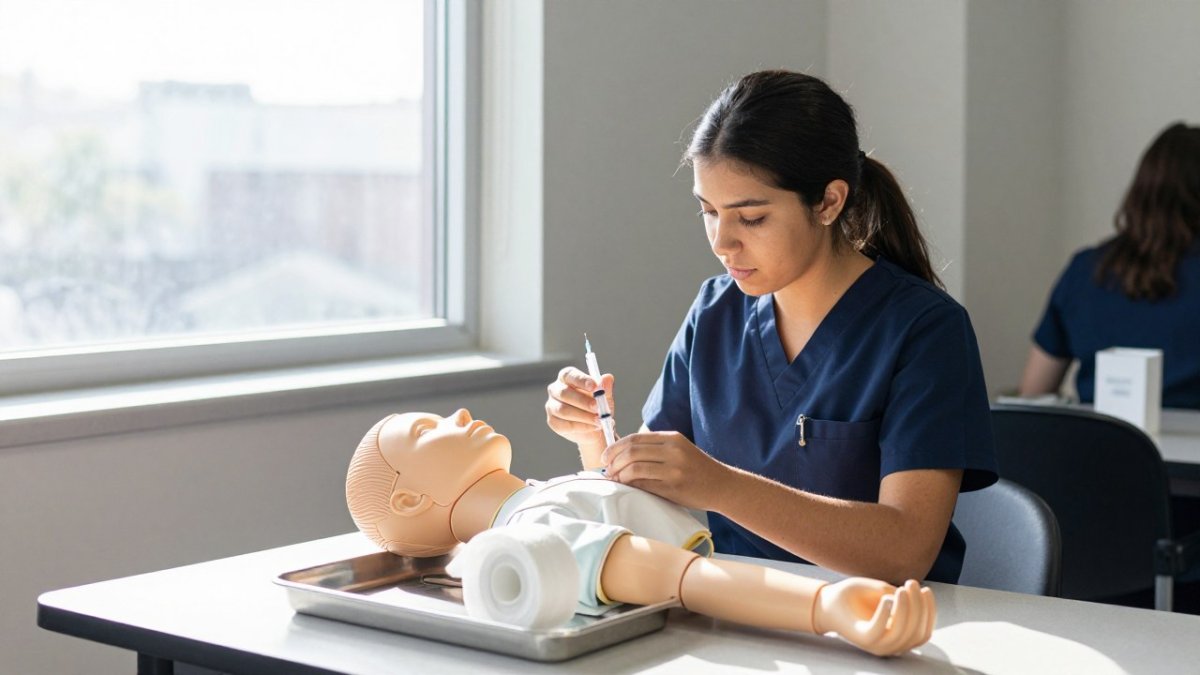
The job splits into two halves. Participate in our in-person Phlebotomy Lab to gain hands-on experience with blood drawing techniques and patient interaction. One half is hands-on patient care. The other is the paperwork and scheduling that keeps the day on track.
Most days, you will do both. A typical morning might start with patient intake, then shift to assisting a provider with a procedure, then end with chart updates.
Clinical Duties vs. Administrative Duties
Clinical duties involve direct patient care. Administrative duties involve records, phones, and scheduling.
Here is how the two sides break down:
Clinical duties | Administrative duties |
Take vital signs | Schedule appointments |
Prepare patients for exams | Update electronic health records |
Draw blood and collect specimens | Answer phones and greet patients |
Assist with procedures | Handle billing paperwork |
Administer medications as directed | Manage patient files |

Both sides matter. A strong assistant moves between them without missing a beat.
Clinical Medical Assistant Training: What Programs Cover
Clinical medical assistant training teaches the skills you use every shift. Most programs blend classroom work with hands-on labs.
Core topics usually include:
Medical terminology
Anatomy and basic physiology
Infection control
Taking vital signs and blood pressure
Phlebotomy and specimen collection
Electronic health records and documentation
Communication and professionalism
Hybrid and Self-Paced Learning Options
Many students need to keep working while they train. Hybrid programs combine online coursework with in-person labs, which lets you study on your own schedule and still get hands-on practice.
If you are weighing formats, our guide to hybrid medical assistant programs in California walks through how the split between online and lab time actually works.
Program length varies. Some run a few months, others closer to a year. Ask about total hours, lab time, and what supplies are included before you enroll.
Clinical Medical Assistant Certification and the CCMA Exam
Certification is often voluntary, but many employers prefer it. The Certified Clinical Medical Assistant credential, or CCMA, is one pathway among several. Knowing how the major credentials differ helps you pick the right exam and avoid paying for a credential that does not fit your goals.
The Main Medical Assistant Credentials Compared
The table below summarizes the commonly recognized credentials. Eligibility rules and exam formats change, so confirm current details on each certifying organization's website before you register.
Credential | Common certifying body | Typical eligibility pathways | Exam format | Renewal pattern |
CCMA (Certified Clinical Medical Assistant) | National Healthcareer Association (NHA) | Complete an approved training program, or meet a work-experience pathway | Computer-based, multiple-choice, proctored | Recertification every two years with continuing education |
CMA (AAMA) (Certified Medical Assistant) | American Association of Medical Assistants | Graduate from a CAAHEP- or ABHES-accredited program | Computer-based, multiple-choice, proctored | Recertification every five years with continuing education or exam retake |
RMA (Registered Medical Assistant) | American Medical Technologists | Graduate from an accredited program, complete a formal externship, or meet a military/work-experience pathway | Computer-based, multiple-choice, proctored | Annual or multi-year renewal with continuing education |
NCMA (National Certified Medical Assistant) | National Center for Competency Testing | Complete an approved program or meet a work-experience pathway | Computer-based, multiple-choice, proctored | Recertification every two years with continuing education |
CMAC (Certified Medical Administrative Assistant) | NHA | Complete an approved training program or meet a work-experience pathway | Computer-based, multiple-choice, proctored | Recertification every two years with continuing education |
A few practical distinctions matter more than the acronym:
Accreditation gates some exams. Some credentials, such as the AAMA's CMA, require graduation from an accredited program, so if that credential is your goal, confirm your school's accreditation before you enroll. The CCMA, RMA, and NCMA pathways are more flexible and often accept work experience in place of a formal program.
Clinical vs. administrative focus. Some credentials focus on administrative work rather than clinical care. If your goal is hands-on patient care, choose a clinical credential.
Renewal cost and effort differ. A five-year recertification cycle (CMA (AAMA)) means less frequent paperwork than a two-year cycle, but continuing-education hour requirements vary by body. Factor renewal fees and CE hours into your long-term budget, not just the initial exam fee.
What the CCMA Exam Covers
Check the certifying organization's website for the current exam format and delivery method. Exam content is set by the certifying organization, so review its current candidate handbook for the official topic outline.
A Practical Study Plan
A workable plan spreads review over several weeks rather than cramming:
Review medical terminology daily for 15 minutes.
Practice vitals and phlebotomy skills in the lab until the steps are automatic.
Take a full-length practice test weekly and log every missed question by topic.
Spend extra time on your two weakest domains rather than re-reviewing what you already know.
Schedule the exam once your practice scores are steady across two or three consecutive attempts.
Watch out: registering for an exam before confirming your program's accreditation can leave you ineligible for the credential you actually wanted, so verify eligibility first.
Costs add up between the exam fee, study materials, and any retake fees. Our medical assistant certification cost breakdown covers what to budget before you commit.
Clinical Medical Assistant Salary and Job Outlook
Pay for a clinical medical assistant varies by location, setting, credential, and experience. Rather than quote a single national number, it helps to understand what actually moves earnings up or down.
What Drives Pay Differences
Setting. Hospital outpatient departments and large multispecialty groups tend to pay more than small private practices, partly because they offer shift differentials and more structured pay scales. Community health centers often pay less but may offer loan-repayment or training benefits.
Specialty. Assistants working in specialty practices that require additional skills, such as phlebotomy-heavy roles, cardiology, or dermatology with procedure assisting, often earn more than those in general primary care.
Credential. Holding a recognized clinical credential such as the CCMA, CMA (AAMA), RMA, or NCMA can qualify you for roles that require certification, and some employers pay a differential for it.
Experience. Entry-level assistants typically start near the lower end of the local range, with meaningful increases after the first one to two years and again after gaining specialty skills.
Geography. Wages track local cost of labor. Metropolitan areas and regions with tight healthcare labor markets generally pay more than rural areas, though the gap can be offset by lower living costs.
How to Find Current, Sourced Wage Data
Because wages shift yearly and vary sharply by metro area, use primary sources rather than a single article figure:
The Bureau of Labor Statistics Occupational Outlook Handbook publishes median pay, pay by industry, and projected openings, with state and metro-level wage data available through its Occupational Employment and Wage Statistics program.
State labor market information agencies publish local wage estimates and projected growth for medical assistants.
Job postings in your target metro show what employers are actually offering right now, including sign-on bonuses and shift differentials that headline averages miss.
A practical approach is to pull the BLS median for your state, then compare it against five to ten current local postings to see whether your market runs above or below the national figure.
Job Outlook
Demand for medical assistants follows growth in outpatient care, and clinics continue to hire assistants who can handle both patient care and records. Demand for medical assistants is generally tied to growth in outpatient care. Check the U.S. Bureau of Labor Statistics Occupational Outlook Handbook for current employment projections. Assistants who hold a credential and can demonstrate both clinical and administrative competence tend to have the widest range of openings.
Watch out: relying on a single national average can mislead you in either direction, so check your state and metro figures before you set salary expectations.
Finding Clinical Medical Assistant Jobs After You Finish
Start your job search before you finish training. Ask prospective programs how they support job searches and placement.
Where to look:
Hospital career pages
Private practice websites
Community health centers
Staffing agencies that focus on healthcare
Program job boards and alumni networks
For interview prep, practice explaining how you handle a nervous patient and how you keep records accurate under pressure. Employers want reliability and calm more than perfect answers.
How to Become a Clinical Medical Assistant: Step by Step
Here is the path from zero to hired:
Check the requirements in your state. Scope of practice and supervision rules vary, so confirm what a clinical medical assistant can do where you plan to work.
Pick a training program. Compare length, cost, lab time, and whether certification prep is included.
Complete your coursework and clinical hours. Hands-on experience is what employers ask about.
Earn your certification. Schedule the CCMA exam and prepare with practice tests.
Build your resume. List your lab skills, software you know, and any clinical hours.
Apply and interview. Target clinics and practices that hire entry-level assistants.
Want the shortest realistic route? Our guide to the fastest way to get medical assistant certified lays out the timelines side by side.
Claim Your Seat in a Medical Assisting Program
The gap between wanting a healthcare career and actually starting one usually comes down to one decision: picking a program and committing. That is the step most people stall on.
Our medical assisting track is designed for people who need to keep working while they train. Our hybrid model pairs digital coursework with hands-on labs. Tuition is all-inclusive, covering textbooks, lab supplies, and CPR certification. We are an official CA regional testing site.
If you are ready to move, view our medical assistant class schedule and reserve your spot.
Ready to start your healthcare career? Get started with Life Vest Training and train for the clinical skills employers actually hire for.
Frequently Asked Questions
What does a clinical medical assistant do?
A clinical medical assistant handles the hands-on side of patient care: taking vital signs like blood pressure, drawing blood, collecting specimens, preparing patients for exams, and assisting providers during procedures. Most also manage patient intake, update electronic health records, and keep the exam rooms stocked. The role blends clinical skills with communication, since you are often the person patients talk to before the physician walks in.
How long does clinical medical assistant training take?
Program length varies. Career-focused medical assisting tracks can run as short as 7 weeks when they combine digital coursework with hands-on labs, while community college programs often stretch over a year. Shorter programs suit career changers who want to enter the workforce quickly. Check whether tuition covers textbooks, lab supplies, and CPR certification, since those add-ons can change the real cost.
Is a CCMA better than a CNA?
They lead to different work. A CNA focuses on direct patient care like bathing, feeding, and mobility, usually in nursing homes or hospitals. A certified clinical medical assistant works in medical offices and clinics, handling vitals, phlebotomy, and provider support. Pay and duties vary by setting and experience, so compare job listings in your area rather than assuming one credential always pays more.
What is on the certified clinical medical assistant exam?
Check the certifying organization's website for the current exam content outline. A study plan that reviews clinical skills and medical terminology together, with practice questions, tends to prepare candidates well.


Comments